To choose the right type of silicone for your purposes, you should consider the following common criteria.
1. Intended use
There are two types of silicone glue: acid and neutral. Acid glue is suitable for aluminum, glass and other non-corrosive surfaces. Neutral glue can be used on acid-corroded surfaces such as iron, steel, copper, and concrete. Neutral glue is better used on plastic door systems.
2. Country of manufacture – origin of porcelain
Silicone glue is produced from liquid primary silicon polymer (silicone polymer), thickener and some other catalysts. Basically, the production process in all factories is similar. You don't need to worry too much about the origin. It is important that the raw materials used must be pure and suitable for the product line. A small factory using good raw materials can also produce glue of the same quality as the glue of a famous large factory.
3. Sensory evaluation
The glue should not be too clear or too opaque.
The glue is too clear due to the use of a lot of solvents. If you look at some Chinese glues, you will see that the glue is very clear because they use a lot of solvents to reduce production costs. If the solvent is not good, the glue will shrink when dry. Solvents with volatile components will negatively affect the health of users in closed rooms.
The glue is too opaque due to the use of impurities and impure materials. Many impurities in materials will cause the glue to have a short lifespan, become discolored, and become brittle after a period of time.
The glue should not be too liquid or too thick
The glue is too liquid due to the high amount of solvent and low silicon content, so the longevity is not high. Glue that is too thick makes it difficult to apply.
4. Brand
Brand is very important. However, you should not pay too much attention to the brand. Glue is a technical product, we should only care about technical criteria.
5. Technical criteria
When using glue you should pay attention to some important technical information as follows.
a. Adhesion of glue
Adhesive adhesion is calculated based on the force applied per unit area to pull apart the glue joint. Instead of testing the mechanics with complicated machinery in the laboratory, you can do a simple test at home by taking 2 small pieces of aluminum or glass (1 x 1 cm or 2 x 2 cm) and then joining them together with glue. Wait for the glue to dry (about 24 hours) and pull it apart with a meter scale connector. The higher the value of the scale, the better the adhesive adhesion. When the connection is broken, look to see if the break is in the glue - glue or glue - glass / aluminum. Good glue is glue that breaks at the glue - glue. After the glue breaks, will the joint separate or will it still be retained by the glue? Good glue is glue that can hold the connection after breaking (or the glue only breaks locally but not completely).
Testing some glues on the market gave the following results:
A popular type of silicone in Vietnam, type 1: glue joints break at 17-19 kg
A popular type of silicone in Vietnam, type 2: glue joints break at 11-12 kg
When looking at the glue parameters, adhesion is shown in tensile strength (TS - tensile strength). The higher the TS (unit MPa or PSI), the better.
1 MPa = 145 Psi = 10.2 kg/cm2
b. Elongation of glue (elongation %)
The elongation of common glue is usually from 300 - 550%. Normally, the maximum joint displacement is 25%, so glue with an elongation of 300-550% is suitable.
c. Vulcanization time (dry)
Film forming time: 5-10 minutes
Full cure time: 24 hours for normal aluminum and glass joints
Glue that dries too quickly or too slowly is not good. Glue that dries too quickly is susceptible to aging, brittleness, discoloration, and does not last long.
The glue dries too slowly because the glue contains a lot of solvents, affecting construction time.
d. Specific gravity
The specific gravity of acid glue ranges from 0.98 - 1.03 g/cm3.
The specific gravity of neutral glue is from 1.3 - 1.4 g/cm3.
Specific gravity that is too high or too low is not good.
e. Hardness shore A
The A hardness of glue is in the range of 25 - 35. Glue that is too hard is due to the presence of many punching agents (eg CaCO3 stone powder), glue that is too soft is due to too much solvent.
f. Packaging
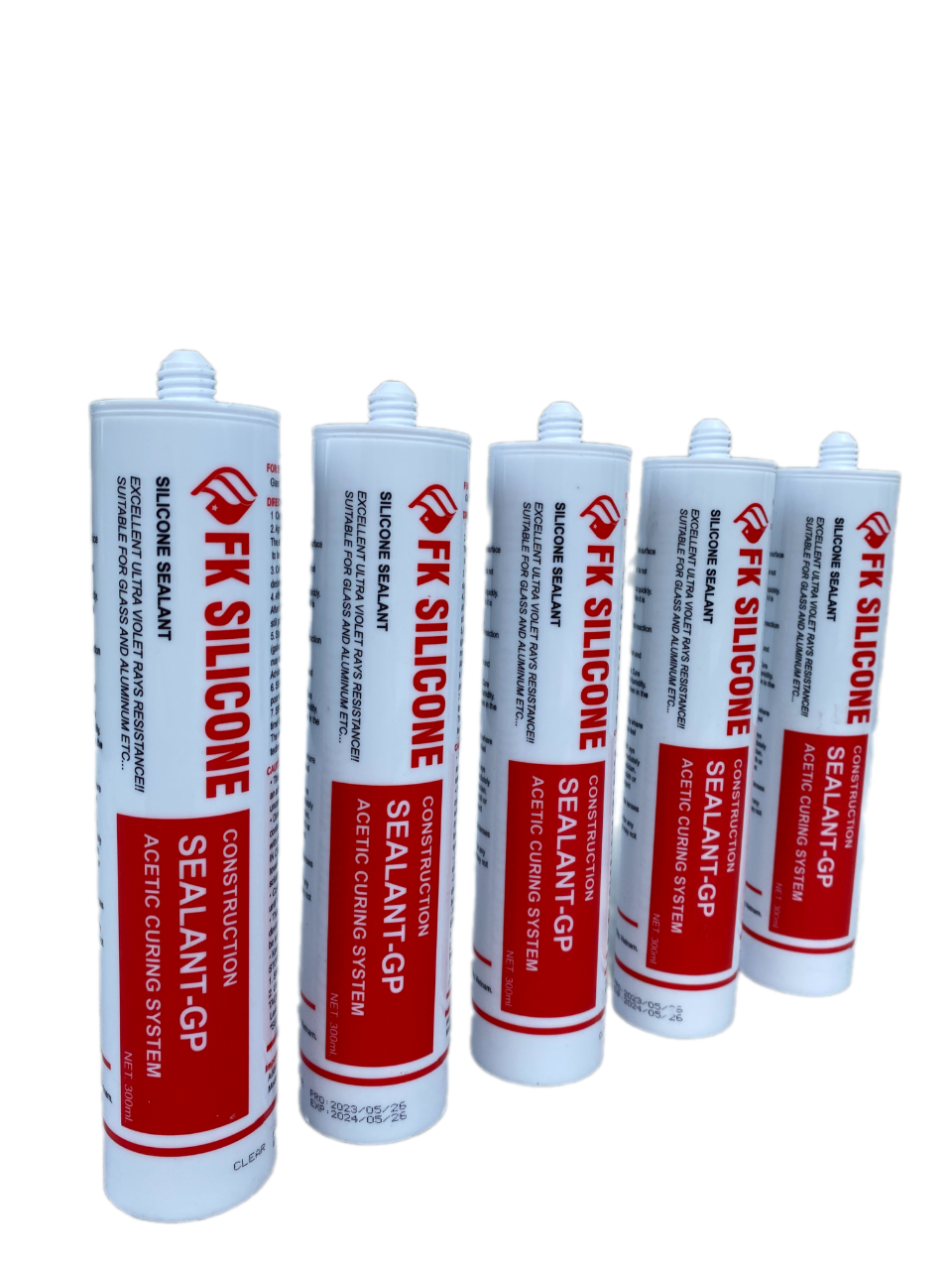
Glue is packed correctly and sufficiently in plastic bottles with capacity of 280ml, 300ml, 310ml depending on product type. The bottle is made of flexible HDPE plastic, not too hard, helping to prolong the preservation time of the glue.
Above is some reference information when choosing silicone sealant. You should consult with the sales staff to be able to choose the best glue that best suits your needs at the most competitive price.
Source: Internet